
Grand Theatre of Nations begins a new life in Yanguan
A travelling theatre finds its new home
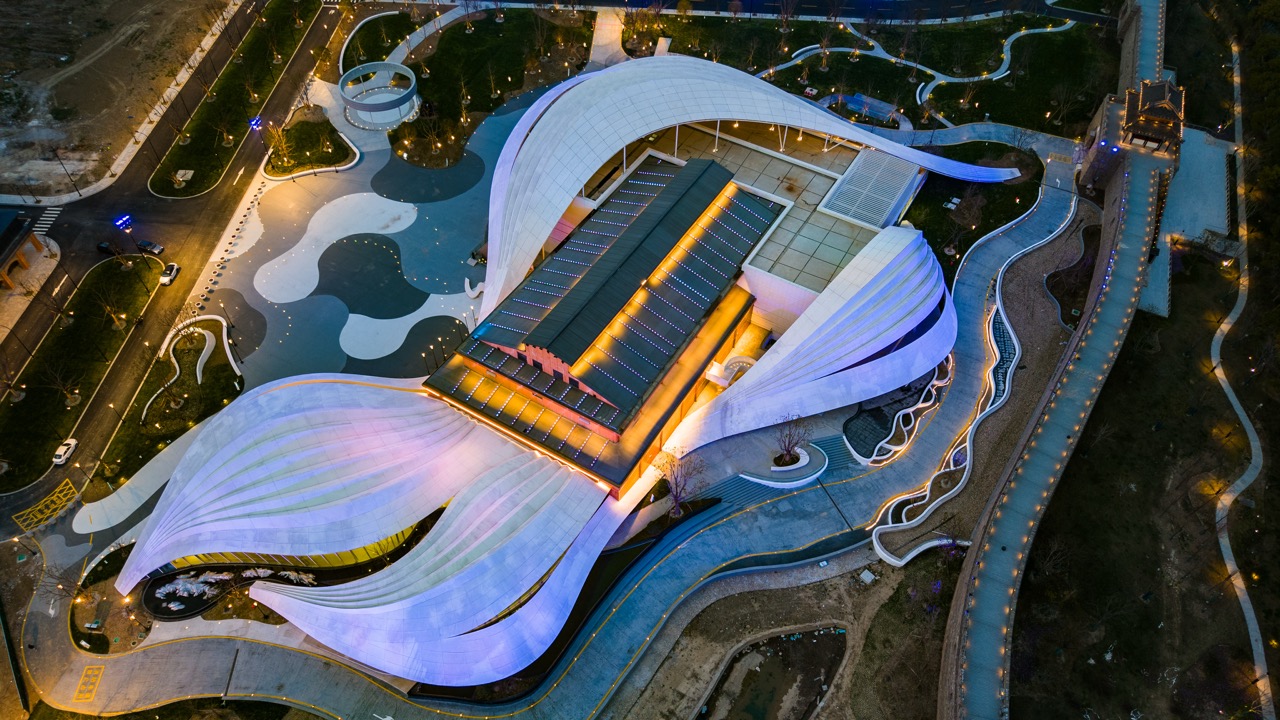
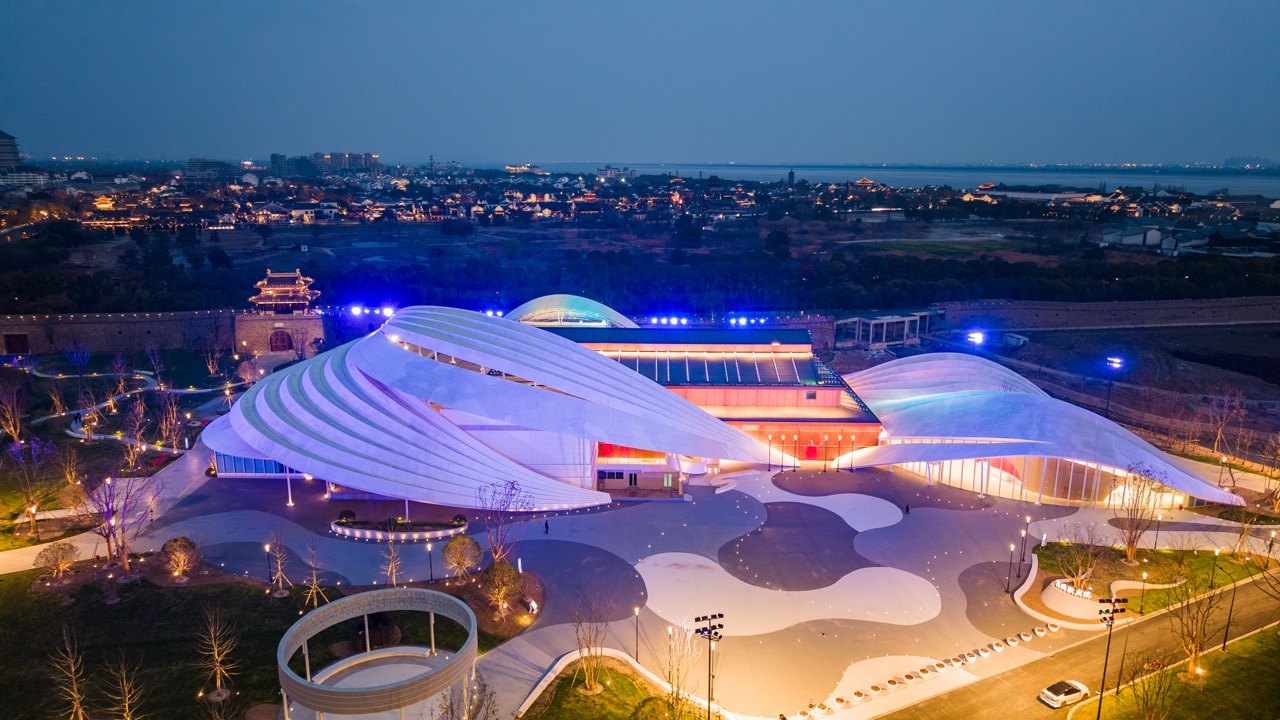
Aerial night shot of Yanguan Grand Theatre of Nations
The Grand Theatre of Nations has completed an extraordinary journey from Paris to Geneva and now to Yanguan Ancient Town in Zhejiang. Reassembled as part of Yanguan’s wider vision for a music-led cultural destination, the theatre brings together European craftsmanship, wooden acoustic design and the heritage of the Qiantang River.
The Grand Theatre of Nations is a rare example of a theatre whose own history has become part of its artistic identity. First created in Paris as a temporary wooden venue for the Comédie-Française, the building was designed to support live performance with warmth, clarity and intimacy. Built from pale Finnish spruce, its all-wood structure was selected not only for its architectural character, but also for the natural acoustic qualities that make wood especially valued in performance spaces.
After serving audiences in Paris, the theatre began its first major relocation in 2014, when it was moved to Geneva during the renovation of the Grand Théâtre de Genève. Rebuilt near the Place des Nations, beside the United Nations’ European headquarters, it became known as the Grand Theatre of Nations. Its role expanded from a theatre venue into a fully equipped opera house, with additional seating and an orchestra pit, giving the building a broader international cultural function.
In Geneva, the theatre became closely associated with cultural exchange. Its location placed it at the centre of an international community of diplomats, organisations and visiting artists, while its stage hosted performances that connected different traditions and audiences. Among its most significant cultural moments was the 2019 presentation of the Chinese National Peking Opera Company’s Havoc in Heaven, which introduced Chinese opera to a full international audience in the venue.
The theatre’s next chapter began when it was dismantled, packed and transported across continents to Yanguan Ancient Town in Haining, Zhejiang. The move required the careful numbering, protection and shipment of thousands of wooden components, preserving the building’s structure while preparing it for a new environment. In June 2022, its materials arrived in Yanguan after a long journey from Europe to China, marking the beginning of a complex reconstruction process.
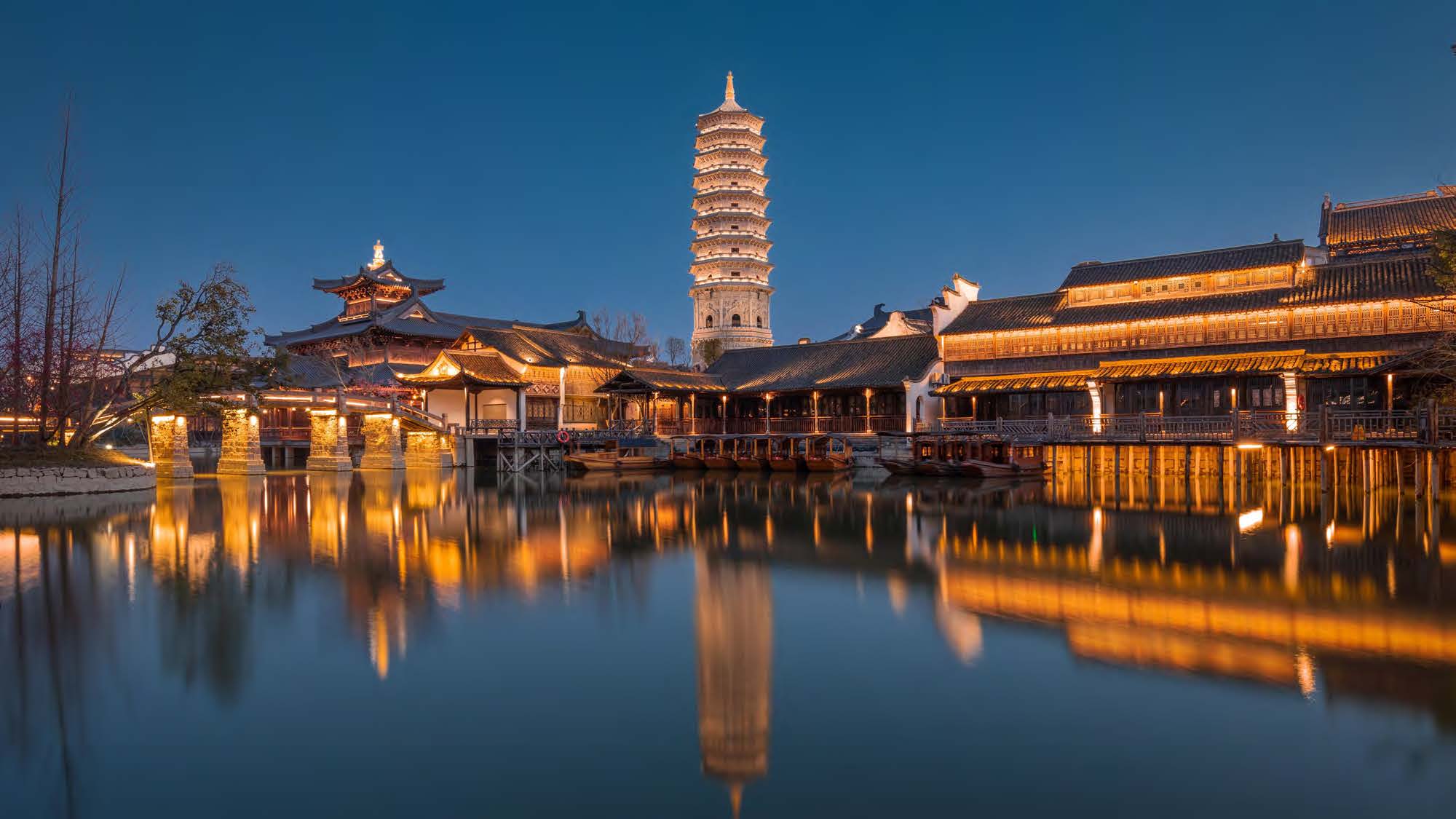
Now established in Yanguan Ancient Town, the theatre forms part of Chaole City, a destination shaped around music, culture, nature, heritage and leisure. Its presence gives Yanguan a distinctive cultural landmark and strengthens the town’s ambition to grow beyond its historic reputation as a prime viewing point for the Qiantang River tidal bore. By bringing a major wooden performance venue into a Jiangnan setting, the project creates a dialogue between European opera-house craft and the architectural traditions of southern China.
The theatre’s reconstruction is not simply a matter of preservation. It represents a new cultural role for a building that has already lived several lives. Its wooden structure, European origins and setting beside one of China’s most famous natural spectacles give it a symbolic value as well as an artistic one. In Yanguan, the Grand Theatre of Nations becomes more than a transferred landmark; it becomes a bridge between places, histories and audiences.
Its forthcoming role as a major performance venue is expected to add new depth to Yanguan’s destination appeal. With the opening concert planned for 1 May 2026, featuring Lang Lang, Yu Lu and the Jiaxing Grand Tide Philharmonic Orchestra, the theatre is positioned to become a defining cultural stage for the region. After journeys through Paris and Geneva, the Grand Theatre of Nations now begins a new life beside the Qiantang River, where its wooden walls are ready to carry a new era of music.
Share this post